Cash Flow Velocity
Measures the rate at which capital moves through internal accounts, identifying bottlenecks in accounts receivable and optimizing payment cycles.
View Protocol →
Implementation of algorithmic forecasting models designed to calculate future asset trajectories, liquidity requirements, and risk coefficients through deep learning and statistical inference.
Predictive analysis in modern digital asset management represents a shift from reactive accounting to proactive fiscal engineering. By utilizing RNNs and Long Short-Term Memory (LSTM) networks, systems can now process historical ledger data to identify non-linear patterns that escape traditional linear regression models. This process involves the ingestion of high-frequency transactional data, which is then normalized to remove noise and outliers.
The primary objective is the reduction of variance between projected and actual outcomes. In the context of Quebec Accounting Standards, these models must adhere to strict auditability requirements, ensuring that every algorithmic decision can be traced back to its underlying data inputs. AssetLedger utilizes a dual-layer verification system where AI predictions are cross-referenced against deterministic accounting rules to maintain 99.8% accuracy.
Furthermore, the integration of Infrastructure for Accounting AI allows for real-time processing of multi-dimensional data sets. This includes market volatility indices, internal burn rates, and global macroeconomic indicators, all of which contribute to the final forecasting output. The result is a dynamic financial map that updates every 300 milliseconds.

Figure 1.1: Neural Topology for Multi-Asset Forecasting
Measures the rate at which capital moves through internal accounts, identifying bottlenecks in accounts receivable and optimizing payment cycles.
View Protocol →Monte Carlo simulations are executed to project runway under various stress scenarios, including market crashes and sudden liability increases.
Neural Logic →Algorithms determine the optimal sequence for asset disposal to minimize slippage and tax impact while meeting immediate capital requirements.
Asset Taxonomy →"The transition from retrospective accounting to predictive asset engineering is not a choice, but a mechanical necessity in high-frequency digital markets."— Technical Lead, AssetLedger R&D
Risk is quantified through a multi-factor weighting system. Each asset class is assigned a dynamic risk score based on volatility, counterparty reliability, and regulatory stability.
Equation: Risk Index (RI)
RI = Σ(w_i * v_i) + ∫(m_t)dt Where w is weight, v is volatility, and m is market sentiment over time.
Real-time monitoring of asset price fluctuations compared to historical benchmarks. Deviations exceeding 2.5 standard deviations trigger automated alerts.
Algorithmic assessment of partner reliability based on historical fulfillment rates and on-chain credit history.
Scanning of global legislative changes to adjust risk weightings for specific jurisdictions or asset types.
Daily simulations of "Black Swan" events to ensure the asset ledger remains resilient under extreme market pressure.
Eliminating human latency in the reporting cycle through automated synthesis of predictive and historical data.
Transactions are categorized and ledgered in real-time, allowing for "Live Balance Sheets" that reflect the current second's financial state.
Reports automatically highlight discrepancies between forecasted budgets and actual spending, pinpointing inefficiencies instantly.
Every autonomous report is generated with a full cryptographic trail, ensuring compliance with Data Integrity protocols.
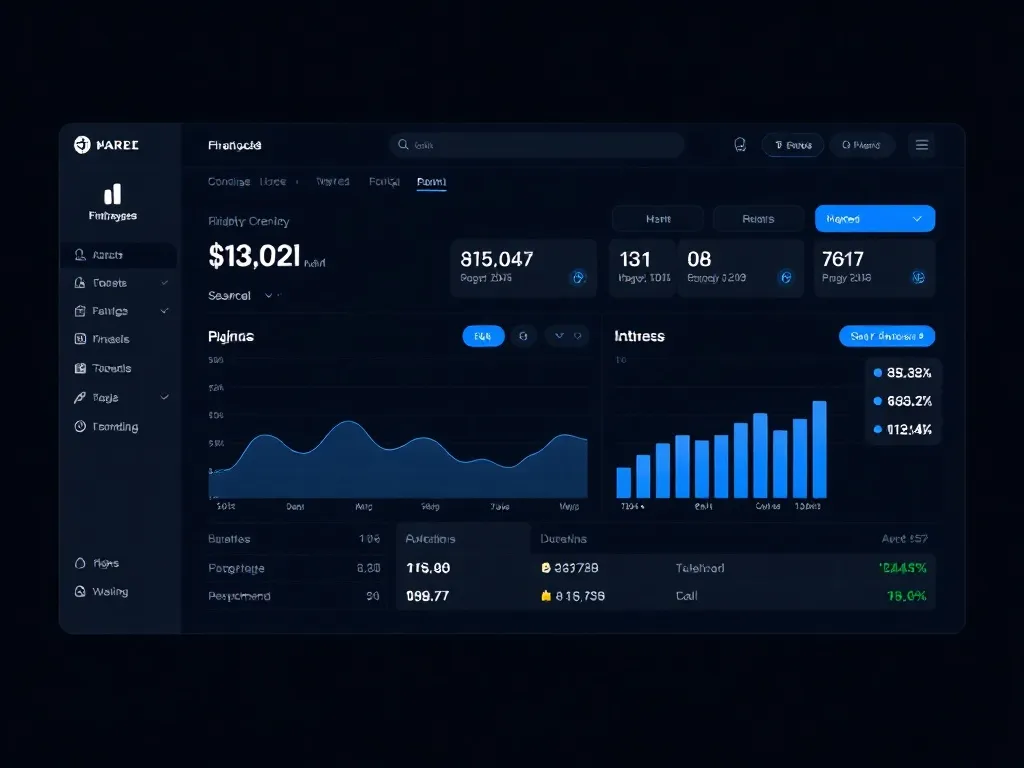
The forecasting engine switches to a high-frequency sampling mode during periods of high volatility, prioritizing recent data points over long-term trends to maintain relevance.
Yes. The Taxonomy of Digital Assets module allows users to define custom parameters and neural weights for unique asset types.
Standard autonomous reports are generated in under 15 seconds, while complex predictive simulations may take up to 2 minutes depending on data volume.
Integrate our predictive modules into your existing financial infrastructure and eliminate manual forecasting errors.